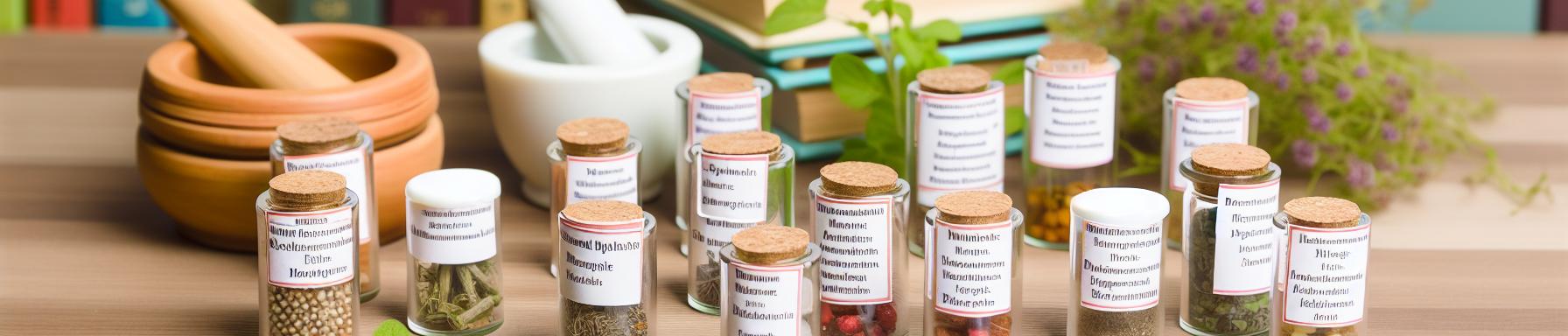
Homeopathy and the fundamentals
Widely spread throughout the world, homeopathy is now ranked as one of the most appreciated and sought-after therapeutic methods. Beneficial for the body and mind, this form of alternative medicine is much less aggressive for the body than most allopathic treatments to which we are sometimes far too accustomed. Etymologically, the term homeopathy derives from the Greek words "homoios" and "pathos" which mean "similar" and "disease" respectively. Indeed, the fundamental principle of this therapeutic method is based on the theory that a disease can be treated with infinitesimal doses of substances that have the ability to reproduce in the body symptoms similar to those caused by the disease itself.
Homeopathic medicines are therefore made from plant, mineral or animal substances characterised by their ability to cause symptoms in a healthy subject similar to those of the disease to be treated. We owe this revolutionary discovery to the German physician Samuel Hahnemann who, towards the end of the 18th century, highlighted the unique properties of cinchona bark. From then on, Hahnemann relied on the principles of similarity and dilution in order to lay the foundations of a totally innovative therapeutic method: homeopathy.
Birth of homeopathy
Originally from Saxony, Samuel Hahnemann was passionate about medicine and scientific research from an early age. After graduating in 1779, the young German practiced medicine for about ten years before finally abandoning it in 1790, disappointed by the alarming ineffectiveness of the treatments administered to the sick at that time.
In order to be able to provide for his family, Hahnemann chose to turn to the translation of medical books and treatises. Shortly afterwards, he began translating a treatise written by the Scottish physician William Cullen, which mainly dealt with curative substances and remedies recommended at the time. But Hahnemann soon realized that Cullen's medical theories about cinchona bark were radically opposed to his own, leading him to conduct a series of experiments to establish the real effects of the substance.
At the end of these experiments, Hahnemann was surprised to discover that cinchona bark had the unique feature of reproducing in a healthy subject symptoms identical to those caused by intermittent fever. Following this discovery, the German doctor decided to continue his experiments in healthy subjects in order to observe the effects of a multitude of different substances in their bodies. Thanks to this principle of similarity, Hahnemann developed a new form of medicine that was much gentler and much less aggressive for the human body: homeopathy was born.
Principle of similarity
Homeopathic medicine is largely based on the theory of similarity first stated by Hippocrates in the terms "similia similibilus curantur". For the father of medicine, there was no doubt that only like was able to heal like, a theory that Hahnemann would draw on to establish the foundations of homeopathy. This principle states that a disease must be treated with a substance that has the ability to reproduce in a healthy subject symptoms similar to those caused by the same disease in an affected subject.
To corroborate his theory and to ensure the effectiveness of his therapeutic method, Hahnemann carried out various experiments carried out on healthy subjects for many years. After observing the effects of the various substances tested, the German doctor was able to determine with certainty that homeopathic remedies were able to cure a multitude of diseases. In short, the principle of similarity is very reminiscent of that of vaccination since in both cases, it involves inoculating an individual with a substance that will allow him or her to fight the disease and develop immunity in order to heal.
Thanks to homeopathic medicines, the body is immune in an entirely natural way, which allows it to heal on its own, without the need for chemical treatments. Nevertheless, to avoid any danger, it is important to ensure that these drugs are not toxic and that the doses administered are infinitesimal.
Dynamization and dilution
Homeopathy is also based on the principles of dynamization and dilution, principles that are particularly important if we consider that they eliminate any risk of toxicity of the drug administered. Thus, it is essential that the basic substances from which the remedies are to be developed are diluted successively until minute doses are obtained.
Hahnemann also established that at the end of each dilution, it was very important to shake the new substance obtained so that the water or alcohol used as a carrier could impregnate itself with the very essence of the parent substance. Also known as dynamization, this fundamental operation intervenes directly in the effectiveness of the homeopathic medicine.
The dilutions, which are mostly measured in Hahnemannian centesimals (CH), almost never exceed 30 CH. In addition, it is important to know that the more infinitesimal the doses, the more effective and safe the drug will work. Although many have stated that no active ingredient can continue after the dilutions carried out, it is nevertheless clear that the processes of dilution and dynamization make it possible to transmit the therapeutic virtues of the basic substance to the remedy finally obtained. In other words, it is possible to say that the water used in successive dilutions actually retains a certain memory of the parent substance, which consequently confers all its therapeutic effectiveness on the drug finally obtained.
Homeopathy today
If for many years homeopathy had some difficulties to establish itself in the medical world, it is clear that today, this alternative therapeutic method is one of the most popular throughout the world. Indeed, many people now prefer to treat themselves in a much gentler and much more natural way, especially since homeopathy is devoid of the risks usually associated with allopathic medicines. As a result, homeopathic medicine is suitable for adults as well as children, women and men, as well as young and old.
Homeopathy is recommended and particularly indicated in the context of the prevention and treatment of chronic respiratory conditions, allergies, gastric disorders, cardiovascular diseases, bone diseases, stress and anxiety.
It is estimated that homeopathy exists in more than eighty countries and that the number of individuals using this therapeutic method continues to grow over the years. In fact, more and more health professionals are strongly recommending that their patients choose homeopathic treatments whenever possible to make them feel better, both physically and mentally.
In addition, homeopathy has the unique feature of serving both curative and preventive purposes, which is therefore a considerable asset in terms of good health and well-being.
Controversy over homeopathy
Acclaimed by many and criticized by others, homeopathy is the subject of virulent controversy despite numerous cures that testify to its effectiveness. However, it is possible to demonstrate that these criticisms are unfounded. Read more
Effectiveness of homeopathy
Increasingly widespread, homeopathy is a gentle and natural therapeutic method that has continued to prove itself over the years. Discover the many benefits of a therapy whose effectiveness is no longer in doubt. Read more
Homeopathic dilution
Dilution is a process that is used in the manufacture of homeopathic remedies in order to eliminate the toxic properties of the strains used. Find out what are the different dilution techniques that exist in homeopathy. Read more
The making of homeopathy
Homeopathic medicines are the subject of a very specific preparation in order to act with precision and efficiency. Discover the different stages of this preparation, from the sampling of the strains to the manufacture of the remedies in the laboratory. Read more
Homeopathic training
Already practiced for more than two centuries, homeopathy is a medical discipline in its own right that is the subject of specific professional training. Find out what this training consists of and what the general conditions are. Read more
Homeopathy books
Treating yourself with homeopathy
Safe for the body, homeopathic medicines are gentle remedies that are suitable for everyone and work effectively. But for the result to be optimal, it is recommended to follow certain precautions for use. Read more